Policy & Accountability
Systems That Last
Technology alone cannot resolve systemic failures in animal welfare. When standards are fragmented, enforcement is inconsistent, and oversight gaps persist, exploitation continues regardless of the tools available.
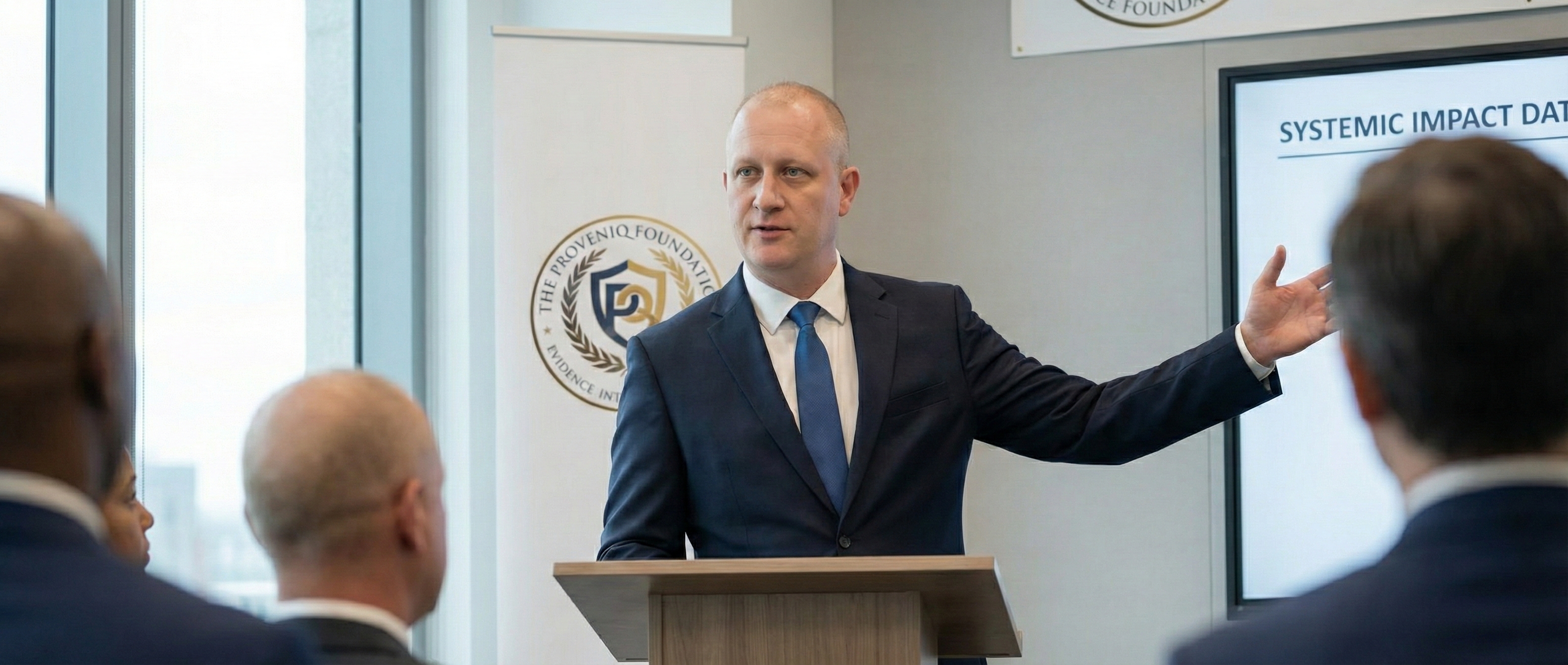
The PROVENIQ Foundation addresses these structural challenges through a coordinated systems approach.
The Three A's Framework
Every Foundation program is evaluated against three foundational criteria that must work together for lasting impact.
Access
Reach help when it matters
Coordinated platforms replace fragmentation with connection.
Affordability
Free or nonprofit-funded
Public-benefit licensing removes financial barriers.
Accountability
Standards with enforcement
Oversight mechanisms close gaps that allow exploitation.
Access
The Foundation's technology platforms—Pet Mayday, ShelterOS, VetOS, and LifeLog—replace fragmented, disconnected services with coordinated infrastructure. Families reporting lost pets, shelters managing intake, veterinary practices tracking records, and communities responding to emergencies operate within a unified system designed for interoperability and rapid response.
Affordability
The Foundation has received its 501(c)(3) public charity determination from the IRS. Core technology is provided at no cost to shelters, rescue organizations, and communities through public-benefit licensing. This structure ensures that resource constraints do not determine which animals receive coordinated care or which families can access reunification services.
Accountability
Technology and goodwill cannot prevent exploitation when oversight mechanisms are absent. Accountability requires clear standards, transparent reporting, and enforceable rules that close loopholes. Without these structural safeguards, the costs of systemic failure are absorbed by shelters, rescue organizations, and families—not by those who cause harm.
Why Accountability Requires More Than Technology
The Foundation's platforms create infrastructure for coordination and transparency. Infrastructure alone, however, cannot address:
- Inadequate oversight of breeding operations that contributes to animal suffering and downstream shelter burden
- Weak traceability systems that impede reunification of lost pets with their families
- Inconsistent standards across jurisdictions that create exploitable gaps
- Limited enforcement capacity that leaves violations unaddressed
Sustainable improvement requires policy frameworks that complement technological solutions. The Foundation supports education and research that helps stakeholders understand how standards-based approaches address these structural gaps.
Accountability in Practice: The B.A.R.K. Act and F.E.T.C.H. Act
The Breeder Accountability and Regulation for Kindness Act (B.A.R.K. Act) and the Fair and Equitable Treatment for Companion Healthcare Act (F.E.T.C.H. Act) are proposed policy frameworks developed for West Virginia. Together, they illustrate how accountability principles can be translated into practical, enforceable standards aligned with the Foundation's mission—the B.A.R.K. Act addressing breeder oversight and data transparency, while the F.E.T.C.H. Act creates the financial infrastructure for post-adoption wellness and insurance reform.
The framework addresses structural gaps through:
- Tiered licensing and inspection — Scale-appropriate oversight with public transparency
- Microchipping and chain-of-custody — Traceability requirements that support reunification
- Consumer disclosure — Information requirements that protect families acquiring pets
- Shelter infrastructure support — Universal intake scanning and funding mechanisms for underserved facilities
- Finder safe-harbor — Legal protections for good-faith helpers who assist stray animals
- Self-sustaining enforcement — Fee structures that maintain regulatory capacity without general fund dependence
Educational Resource
Detailed FAQs and the complete proposed framework texts are available for review.
View B.A.R.K. & F.E.T.C.H. Act Documentation →The Foundation's Role
The PROVENIQ Foundation provides education, research, and technical resources. We do not engage in lobbying, endorse candidates, or conduct partisan political activities.
Our work includes:
- Documenting how systemic failures affect animal welfare outcomes
- Researching evidence-based approaches implemented in other jurisdictions
- Providing educational materials that help stakeholders evaluate policy options
- Ensuring Foundation technology can integrate with standards communities choose to adopt
Organizational Clarity
The PROVENIQ Foundation has received its 501(c)(3) public charity determination under the Internal Revenue Code. Inclusion of policy frameworks on this website is educational and does not constitute lobbying or endorsement of specific legislation. The Foundation does not support or oppose candidates for public office, does not engage in partisan political activity, and does not condition charitable services on political alignment. Donations to the Foundation support charitable programs exclusively.